Japanese Alphabet
Explore the Japanese writing system, learn Hiragana and Katakana, and build a solid foundation for your Japanese journey
Explore the Japanese writing system, learn Hiragana and Katakana, and build a solid foundation for your Japanese journey
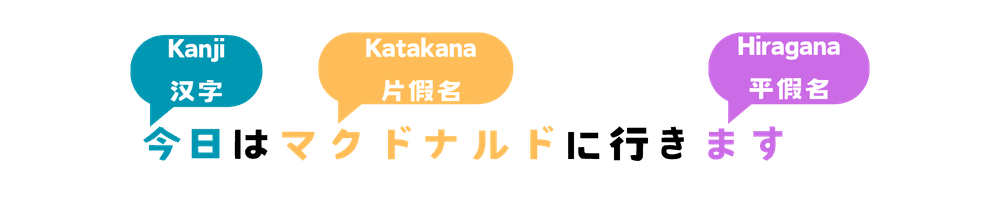
Japanese uses three distinct sets of characters: Hiragana, Katakana, and Kanji. These three scripts often appear together within the same sentence, each serving a different purpose.
📝 Hiragana and Katakana are both phonetic scripts — each character represents a sound rather than a meaning. Hiragana features rounded, flowing strokes and is used for native Japanese words, grammatical elements, and verb endings. Katakana has sharper, more angular strokes and is primarily used for foreign loanwords, brand names, and onomatopoeia.
📖 Kanji are characters adopted from Chinese. Unlike kana, each kanji carries its own meaning and may have multiple readings. Kanji are commonly used for nouns, verb stems, and adjective stems.
🎯 Mastering Hiragana and Katakana is the essential first step in learning Japanese. Together they form the phonetic foundation of the language, and once you know them, you can read and pronounce any Japanese word written in kana.
🌸 Hiragana is the foundational phonetic script of Japanese, consisting of 46 basic characters. Each character represents a syllable, and together they can express every sound in the language. With their rounded, flowing strokes, hiragana characters are the first writing system most learners master.
📚 Hiragana is used for native Japanese words, grammatical particles, verb and adjective endings, and as reading aids (furigana) above kanji. It is the most frequently used script in everyday writing.
🔤 Beyond the 46 basics, diacritical marks (゛and ゜) create 23 additional sounds, and combining characters with small ゃ, ゅ, ょ produces contracted syllables — giving you access to the full range of Japanese pronunciation.